Want to speak to someone who understands?
LUMI Support Coordination helps NDIS participants put their plan to work, with support coordination and psychosocial (mental health) recovery coaching. With clients in Victoria and Queensland and telehealth Australia-wide, we build each support around the person and your goals.
Offices in Melbourne and Brisbane. Telehealth Australia-wide. We pick up the phone. 300+ families supported. Hospital, justice and housing referrals welcome.
About us.
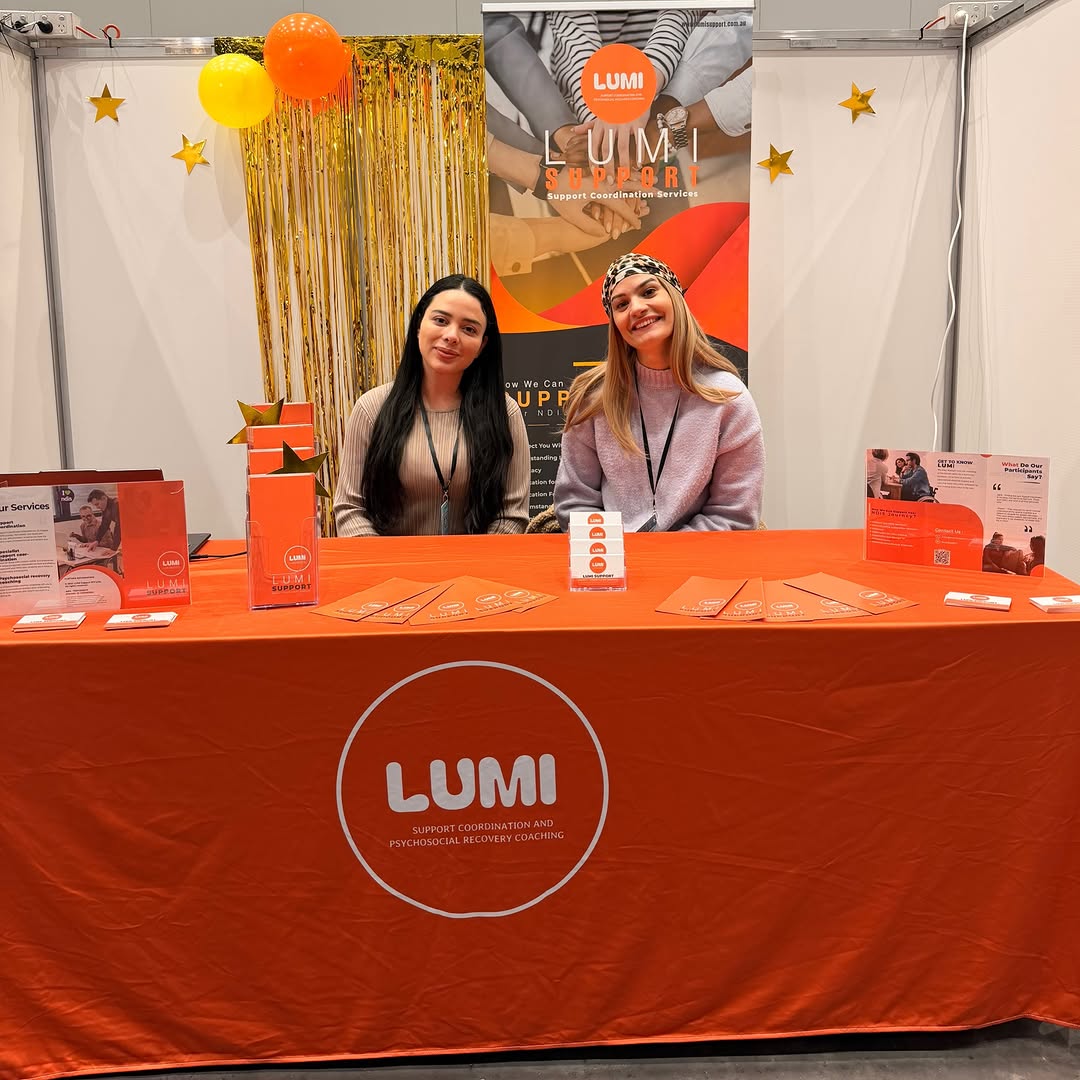
LUMI Support Coordination is an NDIS provider that does one job and does it well: support coordination. Our coordinators help participants understand their plan, find the right providers and keep every support working together, from everyday coordination through to the most complex situations.
We started in Melbourne and now have a second office in Brisbane, with clients in both places. We also offer telehealth Australia-wide. Our team brings experience from disability, mental health, hospital and justice settings, and every participant has a named coordinator with the rest of the team behind them.
Our staff come from many cultures and speak a range of languages, so we can match you with a coordinator who understands your background and what matters to you.
Our offices
MelbourneLevel 1, 486 Lower Heidelberg Road VIC 3084
Visits by appointment
Brisbane470 St Pauls Terrace, Fortitude Valley QLD 4006
Visits by appointment
We also meet participants at home, in hospital or wherever suits them.
What's happening right now?
Pick the one closest to your situation and see how we help.
Plan review or appeal
If your plan no longer fits, we help you gather the right evidence and reports, and stay with you through each step of a review or an appeal.
Next step: call 0412 835 573 or send a referral. Have your current plan handy when you call and we will tell you what is realistic.
Our four services.
An NDIS plan only helps once the right supports are in place. Pick the service that sounds closest to you and we will talk it through on the first call.
-
1Specialist Support Coordination (Level 3)
- What it is
- A higher level of coordination that some NDIS plans fund when life is complicated or close to a crisis.
- Who it is for
- People with high or complex needs, for example someone leaving hospital or custody, at risk of losing their home, or living with behaviours of concern.
- How it helps
- Your specialist coordinator works through the hard problems with you, gets every service working from one plan and moves quickly when things change.
-
2Support Coordination (Level 2)
- What it is
- Help to understand your NDIS plan and turn the funding into real supports.
- Who it is for
- Participants who have support coordination in their plan, and the families and carers who want one person to call.
- How it helps
- We explain your budgets in plain words, find and set up providers that suit you, keep them talking to each other and help you get ready for plan reviews.
-
3Psychosocial Recovery Coaching
- What it is
- An NDIS support for people living with a psychosocial disability, meaning a mental health condition that affects everyday life.
- Who it is for
- Participants with recovery coaching in their plan who want someone in their corner while they work towards their own goals.
- How it helps
- Your coach works with you on the goals you choose, builds skills and confidence, and helps you connect with services and your community.
-
4NDIS Planning
- What it is
- Help to prepare for an NDIS planning meeting or a plan reassessment, so the plan matches what you really need.
- Who it is for
- People applying to the NDIS, getting ready for a first plan, or coming up to a reassessment.
- How it helps
- We help you set out your goals, gather the reports and evidence, and know what to expect on the day. If the plan still falls short, we help you ask for a review.
You choose your providers and can change them, or change coordinator, at any time. It is your plan and your call.
Read our guide to support coordination (PDF)
Easy Read version (PDF)
Our areas of specialisation.
These are areas of expertise, not separate services. We bring them to all four of our services, every week. Open any heading to read more.
Disabilities and injuries
Psychosocial disability
Mental health conditions such as schizophrenia, bipolar disorder, severe depression, borderline personality disorder and complex trauma. We take a recovery-focused, trauma-aware approach and stay in step with your mental health team, psychiatrist and community mental health services.
Autism and intellectual disability
Person-centred support that fits the way you communicate, with Easy Read and visual tools when they help. We use supported decision-making so your choices lead, and build the skills for a more independent life.
Acquired brain injury
Traumatic brain injury (a head injury), stroke, hypoxic brain injury (from a loss of oxygen) and alcohol-related brain injury. We line up rehabilitation, allied health and cognitive supports for memory and thinking, and plan the move back into community life.
Spinal cord injury
Paraplegia and quadriplegia (tetraplegia), new or long-standing. We plan the move from the spinal unit and rehabilitation to home, and source power wheelchairs, hoists, pressure care equipment and environmental controls. We also arrange home and vehicle changes, SDA applications, high-intensity supports such as bowel and bladder care, respiratory support and pressure injury prevention, and links to spinal outreach services, peer support and a return to work or study.
Neurological and degenerative conditions
MS, motor neurone disease, Huntington's, Parkinson's and cerebral palsy. We plan early for needs that change over time and keep allied health and assistive technology one step ahead.
Dementia, including younger onset
Younger onset dementia (before 65), Alzheimer's, frontotemporal and Lewy body dementia, and dementia linked to Down syndrome. We arrange dementia-specific supports and carer respite, help families with guardianship, enduring power of attorney and advance care planning, and connect you with Dementia Australia, Dementia Support Australia, geriatricians and memory clinics. If aged care becomes the right place, we manage the move from the NDIS.
Complex health and high physical support needs
PEG feeding, tracheostomy, ventilation, epilepsy, and complex bowel or pressure care. We coordinate nursing, disability-related health supports and high-intensity daily living supports.
Dual and multiple diagnoses
More than one condition at once, such as intellectual disability with mental illness, autism with ADHD, or disability alongside substance use. We make health, disability and mental health services work as one team.
Behaviours
Behaviours of concern
We bring in Positive Behaviour Support practitioners, help put Behaviour Support Plans into practice and train the support team so everyone responds the same way, in every setting.
Restrictive practices
We know how regulated restrictive practices work, including authorisation and what providers must report to the NDIS Quality and Safeguards Commission. The aim is always to use less, then none.
Behaviours linked to cognitive conditions
Changed behaviour caused by dementia, a brain injury or a neurological condition. We work with Dementia Support Australia and specialist behaviour clinicians.
Self-harm, suicidality and crisis
Safety plans and a clear response when things escalate, working with mental health crisis teams, hospitals and treating clinicians.
Substance use
When alcohol or drugs affect your disability or your supports. We coordinate with AOD services, detox and rehab programs.
Complex situations
Housing and accommodation
Supported Independent Living (SIL), Specialist Disability Accommodation (SDA), Individualised Living Options (ILO) and medium-term accommodation (MTA). We help people facing homelessness, and anyone in housing that does not suit them, such as aged care.
Hospital discharge and crisis response
We plan the discharge with the hospital's social workers and the NDIA's health liaison officers, so supports are ready before you leave. When a placement breaks down or things change overnight, we move quickly.
Justice and forensic involvement
Support for people on parole or orders, or coming out of custody. We keep Corrections, lawyers, the Public Guardian and the Public Trustee working from the same plan.
Child protection and families
For young people and children living in out-of-home care, and for families working with child protection. We also help teenagers make the step from youth services into adult services.
Culturally diverse and First Nations participants
Culturally safe support for Aboriginal and Torres Strait Islander people and for culturally and linguistically diverse communities, with interpreters and community-controlled organisations.
Vulnerable participants and safeguarding
When someone could be harmed, neglected, exploited or left isolated, or has ageing carers and few people around them. We work with guardians, advocates and safeguarding agencies to keep them safe.
NDIS plan reviews, appeals and funding advocacy
We gather the evidence and write the reports when a plan is reassessed, your circumstances change or you ask for an internal review, and we stay with you through an appeal to the Administrative Review Tribunal (ART). We make the case for specialist support coordination and higher funding levels where your needs call for them.
How we work: the person comes first, we are mindful of trauma, we build on what is already going well, and we work as one team with families, guardians, clinicians and providers so the support around you is safe and lasts.
Three steps to get started.
Get in touch
Call us, send an enquiry or make a referral. Participants, families, hospital staff and coordinators can all refer.
Talk it through
We talk about your plan, your goals and what is happening right now, then match you with the right person on our team.
We coordinate
Your coordinator works with everyone involved and keeps you updated, with the whole team behind them.

Why we're different.
For a lot of organisations, support coordination is one item on a long list of services. At LUMI it is our focus. We don't provide support workers, therapy or accommodation, so we have no services of our own to steer you towards. That keeps our advice impartial and leaves us free to recommend the providers that are genuinely right for you.
- We pick up the phone, and each coordinator looks after a small number of participants
- 300+ families supported
- Specialist support coordination for complex situations
- Psychosocial recovery coaching from coaches with psychology, social work and mental health backgrounds
- Regular check-ins, in person or by phone
- Staff from many cultural and language backgrounds, so we can match you with someone who understands you
- Offices in Melbourne and Brisbane, and telehealth Australia-wide
We work alongside everyone in your corner: participants, families and carers, hospital social workers and discharge teams, justice and forensic teams, behaviour support practitioners and housing providers.
What people say about working with us.
★★★★★Finding our way through NDIS was a nightmare! We just didn't know what we were doing. When Luisa from Lumi was appointed as our program support manager things turned around. Her knowledge of how the system works is incredible but it has been her commitment and tenacity to get the best outcomes for her clients that has been telling. Luisa is approachable and caring and has built a positive relationship with my brother in law so that he feels listened to and not just a cog in a big wheel without much of a voice. Thanks Luisa for all you have done for us!
★★★★★I highly recommend LUMI Support! The team has been amazing in helping us achieve our goals. Their support coordinators are extremely knowledgeable, experienced and genuinely care about achieving the best outcomes. They always go above and beyond and are incredibly helpful and professional. I couldn’t be happier with the support and service we have received. Thank you to the wonderful LUMI team!
★★★★★Couldn't recommend higher, Lumi advocated for me and helped me get some much needed supports from the NDIS. Really appreciate it!
Rated 4.9 out of 5 from 12 Google reviews. Read them all on Google
Feedback and complaints.
We want to hear from you, whether something went well, could be better or went wrong. Every piece of feedback is read by a team leader, and telling us will never affect the support you receive.
- ComplimentsTell us when someone on our team made a difference, so we can thank them and keep doing it.
- SuggestionsAn idea that would make working with us easier? We would love to hear it.
- ComplaintsIf you are unhappy with something we did, or did not do, tell us. We will look into it with you and let you know what changes.
Send us your feedback
This form goes straight to our team.
Other ways to tell us
Talk to your coordinator, call 0412 835 573 or email info@lumisupport.com.au. A family member, advocate or interpreter (TIS National 131 450) can contact us for you, and the National Relay Service is there if you need it.
We let you know we have received it, look into it with you and give you a clear answer. Where something needs to change, it changes.
Reporting an incident
An incident is something that has happened, or nearly happened, that caused harm or put someone at risk, such as an injury, abuse, neglect or a missing person.
If anyone is in danger right now, call 000 first. Then call us on 0412 835 573 so we can act straight away.
You can also contact the NDIS Quality and Safeguards Commission on 1800 035 544 or at ndiscommission.gov.au. You do not have to tell us first.
NDIS support coordination questions, answered plainly.
If your question is not here, give us a call.
What does a support coordinator do?
A support coordinator helps you understand your NDIS plan, find and connect with the right providers, and keep all your supports working together. Specialist support coordination is for more complex situations, such as a hospital discharge, a return from custody or a housing crisis.
Can you help before someone leaves hospital?
Yes. The earlier we are involved, the better. We work with the hospital team to plan housing, supports and therapies so the move home is safe and supported.
Do you help people leaving prison or a forensic unit?
Yes. We support people returning to the community after custody or a forensic hospital stay, working alongside justice and health teams.
Can you help me find somewhere to live?
We help you understand options like supported independent living (SIL), specialist disability accommodation (SDA) and medium-term accommodation, and work with providers to find a home that suits your needs and funding.
What if I disagree with an NDIS decision?
You can ask for a review. If you still disagree, you may be able to appeal to the Administrative Review Tribunal. We help you prepare, gather evidence and understand each step.
How do I make a referral?
Call us on 0412 835 573 or use the form on this page. Hospital staff, coordinators, families and participants can all refer.
Meet our staff.
The people who pick up the phone.
- LLuisaTeam Leader, Specialist Support Coordinator
- LLisaSupport Coordinator and Recovery Coach
- AAlexanderSupport Coordinator and Psychosocial Recovery Coach
- VVidushiSupport Coordinator
- CCharmLUMI team
- AAliLUMI team
- CClintLUMI team
- MMattLUMI team

Make a referral or get started.
Both forms go straight into our system, so the right coordinator sees them quickly. Not sure which one? Pick the first and we will take it from there.
Prefer to talk? Call 0412 835 573. If someone is unsafe now, call 000, or Lifeline on 13 11 14.
Get in touch.
One conversation is enough to understand your situation and match you with the right person. No pressure, no obligation.
0412 835 573info@lumisupport.com.auMonday to Friday, business hours
After hours? Send a referral or intake form and we'll be in touch on the next business day. If someone is unsafe now, call 000, or Lifeline on 13 11 14.
You are welcome to bring a support person, advocate or interpreter to the first call.
Visit us (by appointment)
Melbourne
Level 1, 486 Lower Heidelberg Road VIC 3084
Brisbane
470 St Pauls Terrace, Fortitude Valley QLD 4006